




Closing the BESS Visibility Gap: Why Digital Twins are Essential for Storage O&M
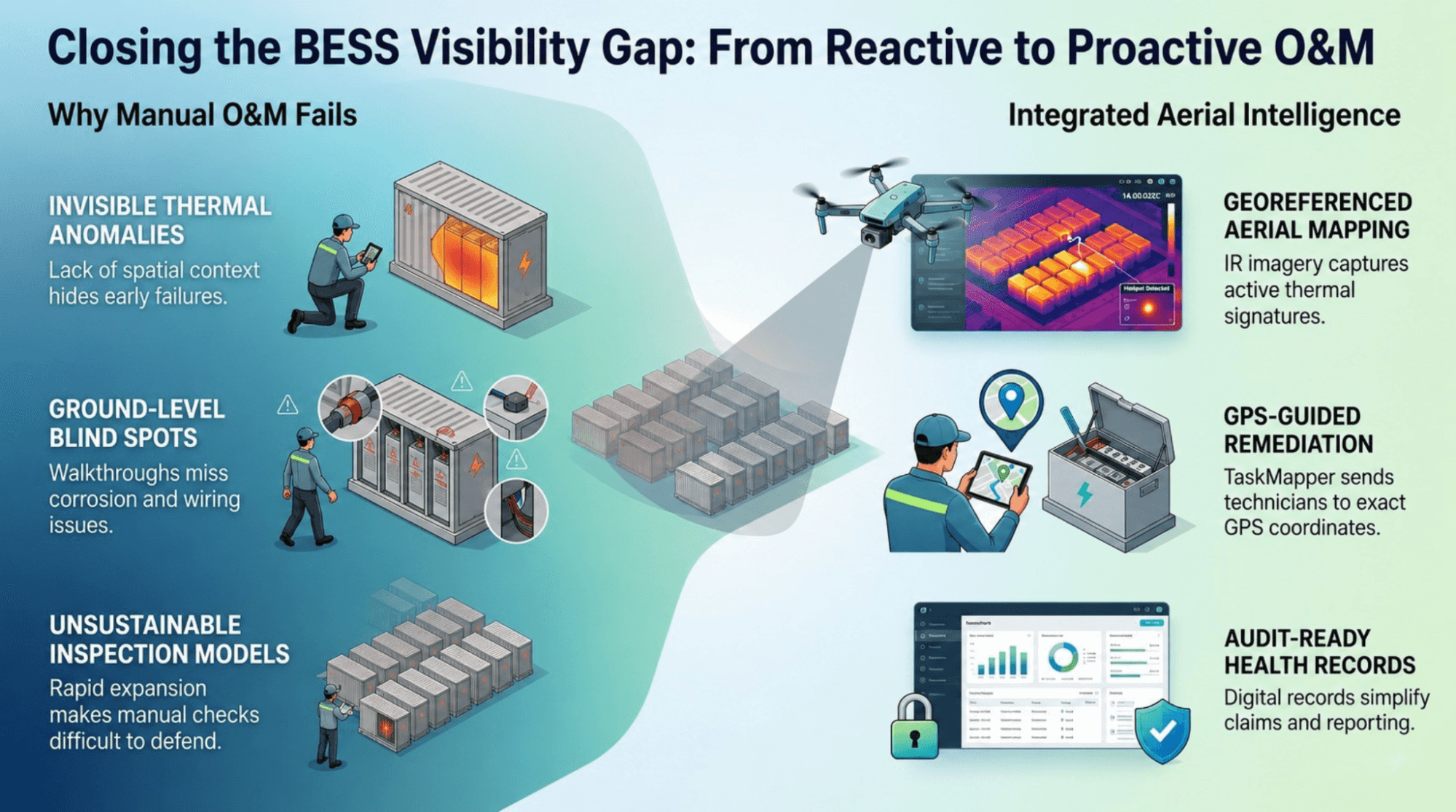
As BESS capacity targets 110 GWh by 2030, traditional solar O&M is struggling to catch "invisible" battery risks like thermal anomalies and enclosure seal failures. SenseHawk closes this gap by converting aerial thermal and RGB data into a Digital Twin, where every defect is georeferenced and instantly turned into a task in TaskMapper. This allows technicians to navigate directly to high-voltage risks and document repairs in real-time, moving from reactive troubleshooting to a proactive, audit-ready health record. By integrating automated monitoring, asset owners optimize uptime and mitigate catastrophic failures before they impact the bottom line.
Stop Scrambling at Mechanical Completion. Your Wind Handover Binder Should Build Itself.
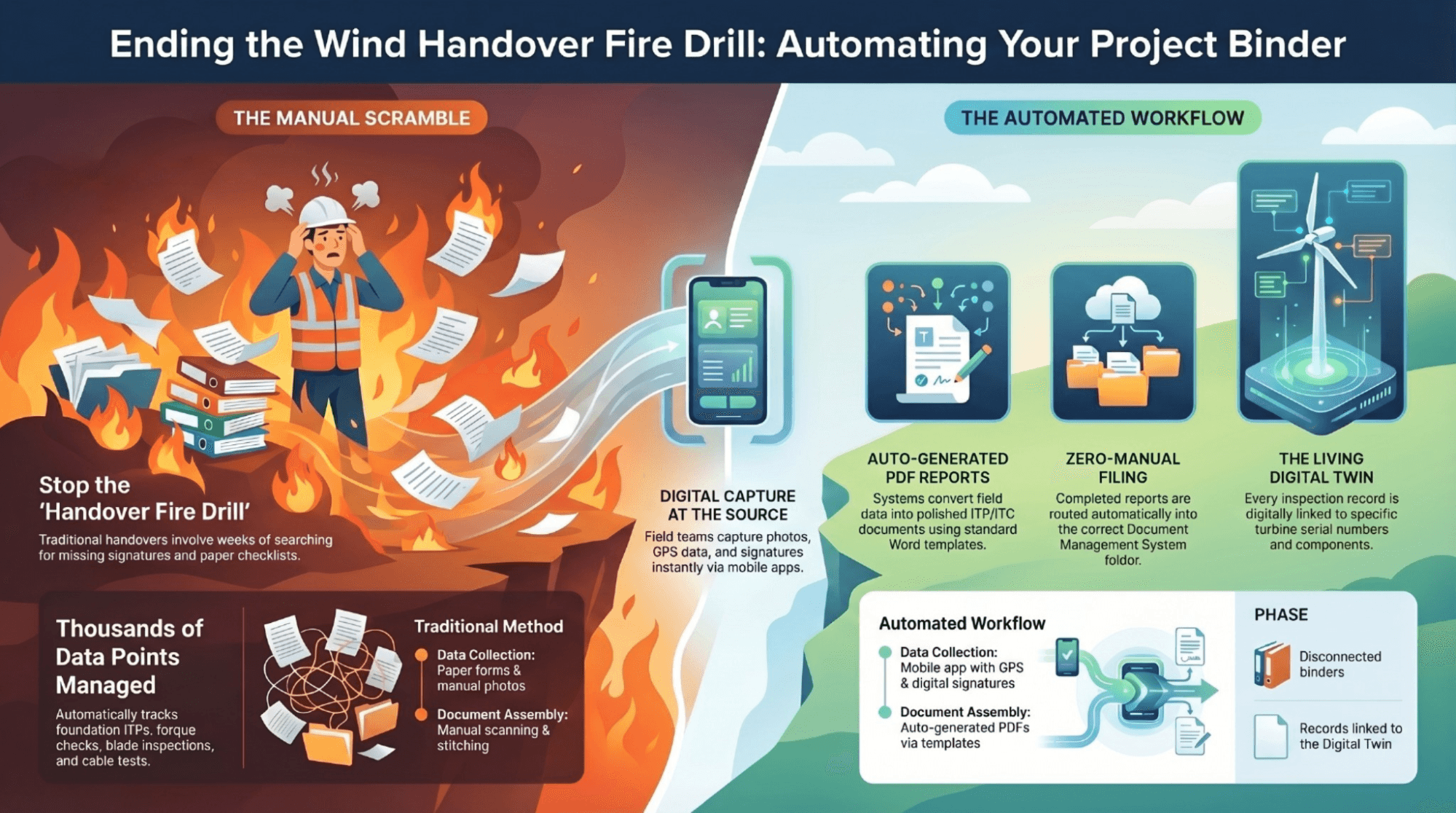
The "Handover Binder" is the final, dreaded hurdle of wind construction, often involving a weeks-long scramble to scan coffee-stained checklists and chase missing signatures. TaskMapper eliminates this nightmare by making the binder build itself from Day 1. As field teams complete digital forms on-site, the system automatically generates polished, signed PDFs and files them into the correct folders. Because every record is linked to the Digital Twin, the final QC history is already organized by the time you reach mechanical completion. This transforms the handover from a frantic fire drill into a seamless transition, giving O&M teams a fully traceable health record for every turbine.
The Million-Dollar Crane is Waiting: Why Wind Logistics Can't Live in Excel
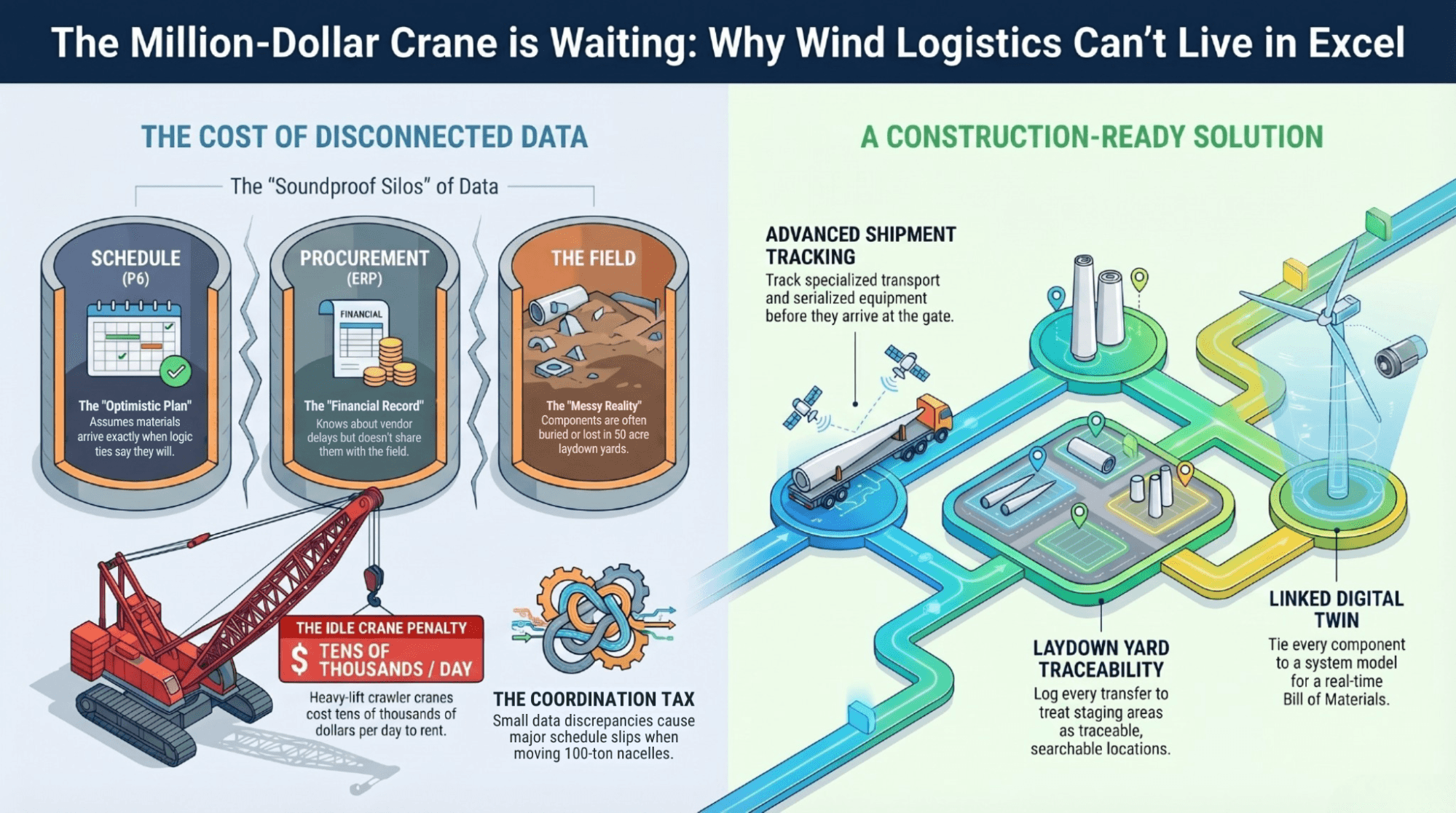
Wind logistics fail when data silos hide the fact that a million-dollar crane is waiting on tower sections "lost" in a 50-acre laydown yard. While solar projects can absorb minor delays, wind construction is unforgiving—if a serialized blade set isn't at the pad, the crane sits idle at a massive daily cost. TaskMapper eliminates this by integrating Advanced Shipment Tracking and Laydown Yard Traceability directly into the Digital Twin. By linking every 100-ton nacelle and 60-meter blade to its exact GPS location and schedule, TaskMapper ensures materials are where they need to be the moment the crane is ready, preventing expensive "coordination tax" and schedule slips.